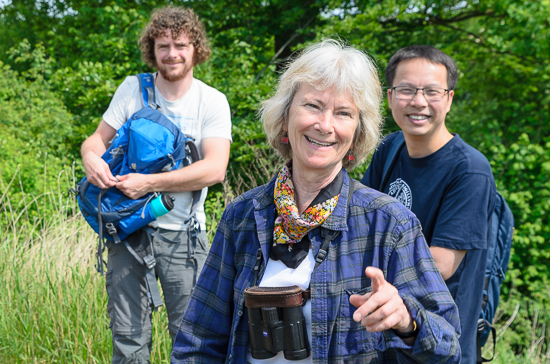
 Idag ordnade SACT (the Scientific Activities group) en örtexkursion till Abusadalen för att plocka ätliga växter. I många länder är det en tradition att gå ut på våren och (mer …)


Biologiska institutionen | Lunds universitet
Idag ordnade SACT (the Scientific Activities group) en örtexkursion till Abusadalen för att plocka ätliga växter. I många länder är det en tradition att gå ut på våren och (mer …)

Yesterday the unit Functional Zoology had their unit day. Or rather half a day. During the afternoon we learnt (mer …)
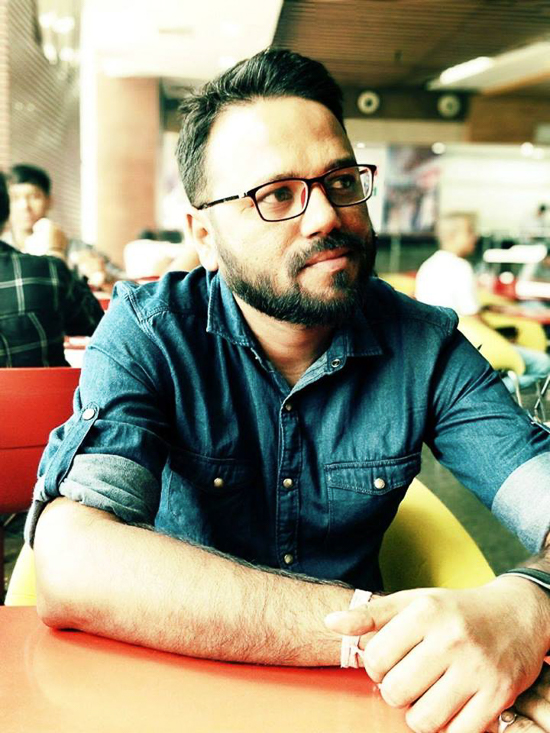
I did my Ph.D. from the school of life sciences, Jawaharlal Nehru University, New Delhi, India. A dwindling question around us that, can a single target in cancer cell result into a cancer cure? And the vast datasets and literature suggest a big “NO”. Factors like p53, NFкB, TGFβ, telomerase, uPA and several other players have been considered as a potential therapeutic window but still the disease standing tall. This also bowed us to change our approach towards the disease, time to time. My doctoral work focused on the functional connection of two major tumor determinants: telomerase catalytic domain (TERT) and urokinase-type plasminogen activator and their therapeutic relevance in cancer therapy. I tried to correlate these two important pro-survival factors in cancer cells and how they interrelate and share the space in cellular processes. TERT has been prominently discussed in terms of life expectancy and its differential expression in 90% of cancers places it in the league of a potential therapeutic target for cancer. Reactivating telomerase is not the only way to obtain cellular immortality, around 10-15% of tumor cells maintain their telomere length over many population doublings in the absence of telomerase. Rather than reactivating telomerase, these cells use alternative mechanisms to maintain their chromosome ends which are collectively known as Alternative Lengthening of Telomeres (ALT). The existence of ALT changes our view towards anti-cancer therapies and development of an effective treatment will benefit by addressing the ALT-pathways. I joined Marita Cohn’s group as a postdoc fellow where I will be studying how telomeres are maintained in the telomerase knockout cells by using yeast as a model system. I will be focused on the elucidation of the molecular mechanisms of telomere maintenance.

Texten korrigerad 2018-05-14
Professor emeritus Nils Malmer avled 17 april, 89 år gammal. Nils utvecklade redan under sin småländska uppväxt ett stort intresse för botanik. Han studerade i Lund och disputerade här 1962 i botanik på en avhandling om myrvegetationen på Åkhultmyren i Småland. Åren 1952-1955 vikarierade (mer …)
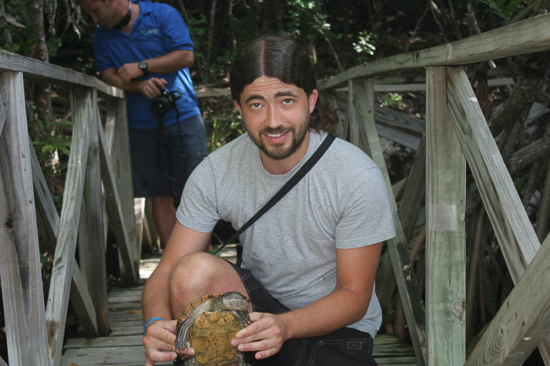
I am a 32 years old postdoctoral researcher and did my PhD in the Natural History Museum of Madrid (MNCN, CSIC) on the mechanisms underlying phenotypic variation in the Iberian wall lizard species complex (Podarcis hispanicus). I am both a field and lab person whose previous work has focused on reptiles, and lizards in particular.
Currently, I am working with Anna Runemark as a postdoctoral researcher in the Evolutionary Ecology of Plant-Insect Interactions research group. We focus on host plant races of Tephritis conura flies and combine methods from evolutionary and chemical ecology and genomics. We aim to investigate the build up of epistatic interactions and the relative roles of regulatory and coding divergence at different stages along the speciation continuum but also the underlying basis of host plant preference.
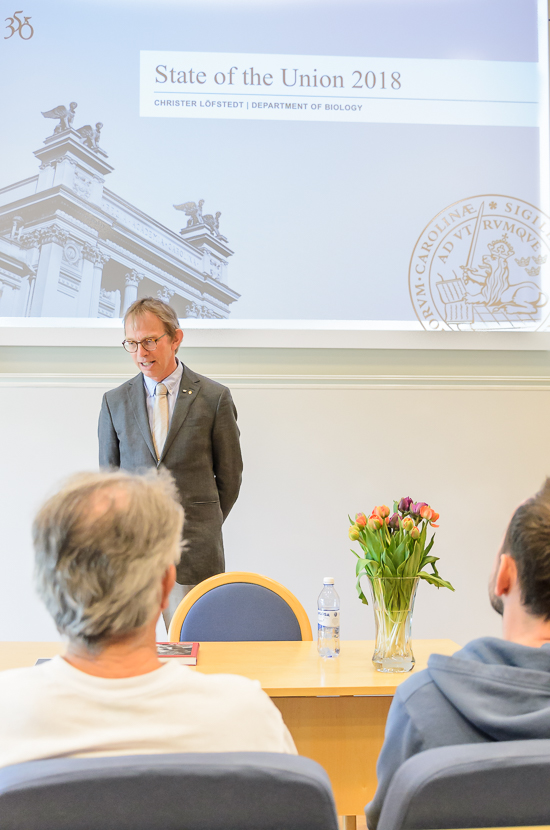
Last Friday Christer Löfstedt held his State of the Union talk. To be fair more of a State of the Department talk, where Christer talked about (mer …)

På dagens Tandem Tandem talk var det Mikael Hedrén och Stanley Heinze som var talarna. Mikael vann den sedvanliga (?) slantsinglingen och fick således börja att (mer …)
A recent study by Aileen Fyfe and Camilla Mørk Røstvik shows that formal inclusion of women does not automatically lead to their full participation. The study used the archives of the Royal Society as data, and is summarized in the March 6th issue of Nature:
How female fellows fared at the Royal Society https://www.nature.com/articles/d41586-018-02746-z
Hi!
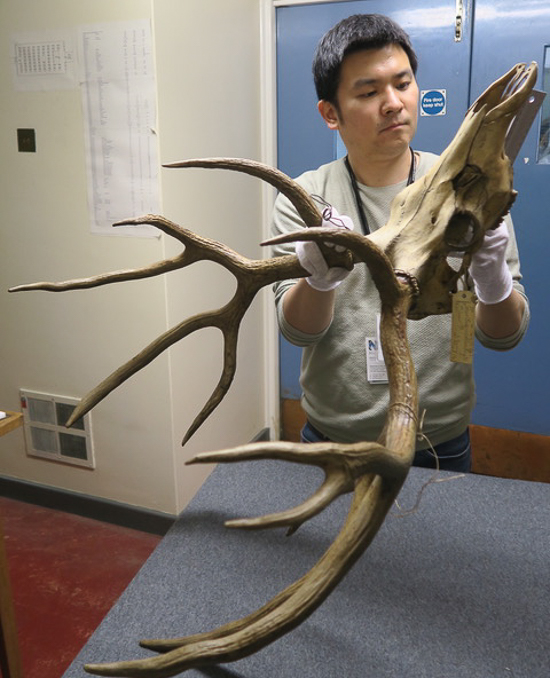
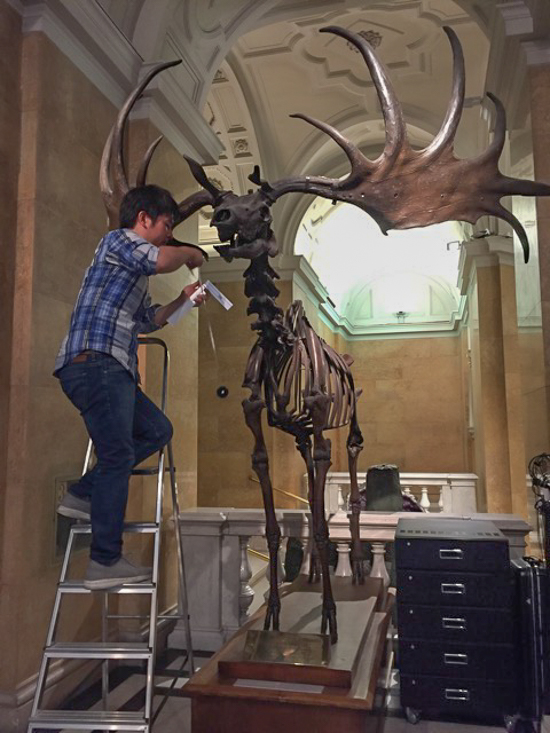
My name is Masahito Tsuboi. In the coming few years, I will be part of the Biology Department at Lund University (LU), studying the evolution of wing morphology in two insect lineages, the family Drosophilidae and the order Odonata, with Erik Svensson at LU and Thomas Hansen at University of Oslo.
Personally, I think comparative studies are fascinating because they allow us to explore the phenotypic diversity across the entire tree of life. This initially motivated me to conduct a phylogenetic comparative study back in 2009 with Niclas Kolm at Uppsala University (now he is at Stockholm University) as part of my MSc degree project. I continued there as a PhD doing phylogenetic
comparative studies on brain sizes in cichlids, pipefishes and seahorses. On a more technical side, I am concerned over the sharp divide between micro- and macroevolutionary biologists. My project in Lund will use a combination of phylogenetic comparative method and quantitative/population genetic theories and tools to reduce the divide among evolutionary biologists interested in phenomena at different time scales.
I will be mostly in Oslo for the first two years, and only be regularly present at Lund in my third year. Nevertheless, I am very excited to be part of the institution and am very much looking forward to share ideas and thoughts over the coming years with you!
Tips från institutionens jämställdhets- och likabehandlingsgruppen!
Jämställdhetsmyndigheten har ett nytt nyhetsbrev om jämställdhetsfrågor.
Här kan du prenumerera på nyhetsbrevet.
Här kan du läsa första nyhetsbrev. Där finns bland annat information om att söka bidrag till jämställdhetsarbete, och om en internationell konferens om män och jämställdhet som ska hållas i Stockholm i år.
Thursday and Friday last week, the PhD students’ annual conference BLAM was held. The whole department was invited to (mer …)
Hi everyone,
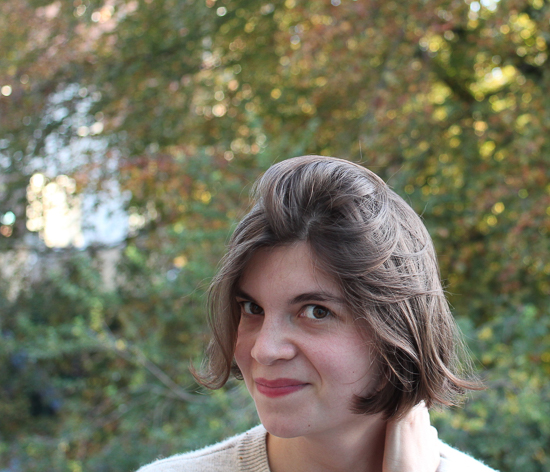
I am Janne and will be working here the coming years as a postdoc. Together with Bengt Hansson I will be studying the factors that lead to genomic divergence between closely related and hybridizing damselfly species of the Ischnura genus.
During and after my PhD at the University of Leuven (Belgium) I studied the evolutionary processes during range expansion and thermal adaptation in two damselfly species and now I just finished a postdoc year at the Free University of Berlin to explore RNA interference possibilities in odonates in (semi)natural conditions. In general I am interested in disentangling the evolutionary processes driving population differentiation using genomics/transcriptomics.
I am pleased to meet you all!
Kommentarer