Biologibloggen

Biologiska institutionen | Lunds universitet

Visa rutor

Efter femtio år vid Lunds universitet går Olle Anderbrant i pension

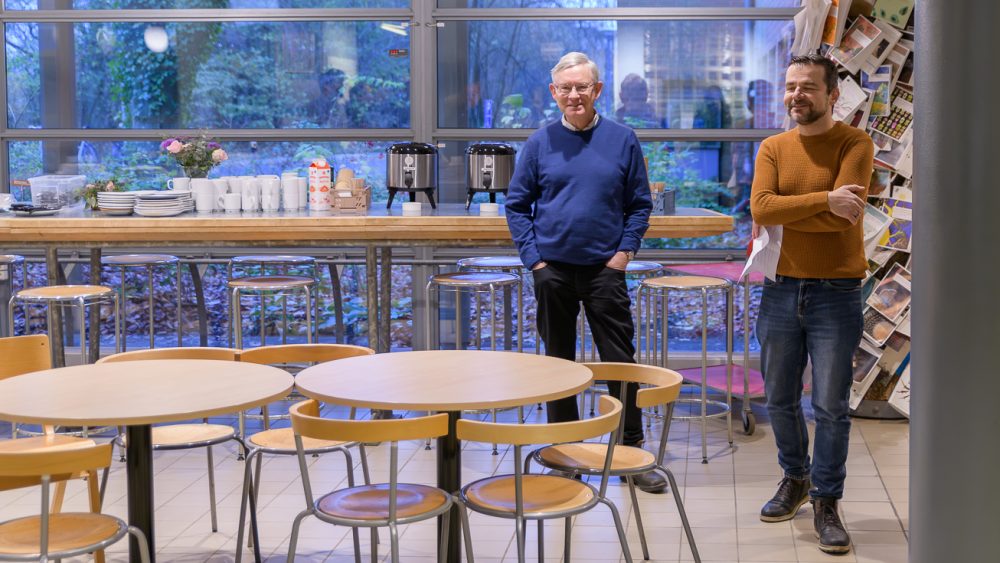
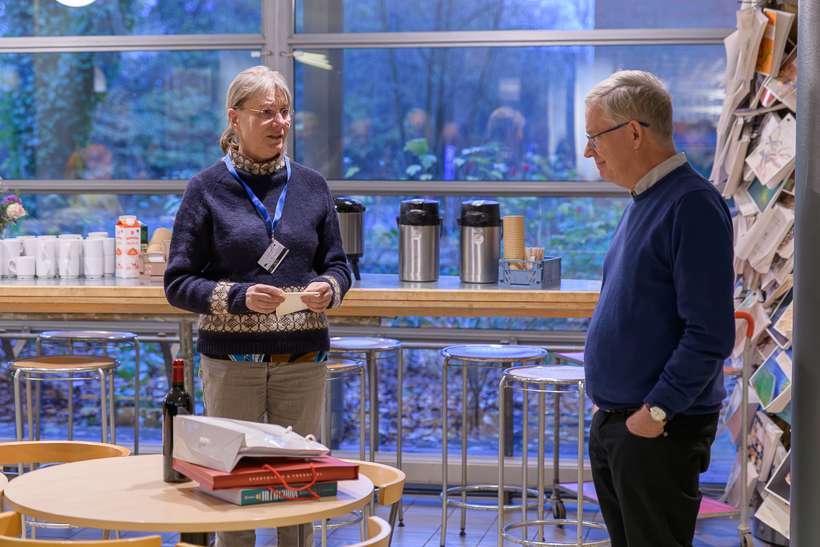
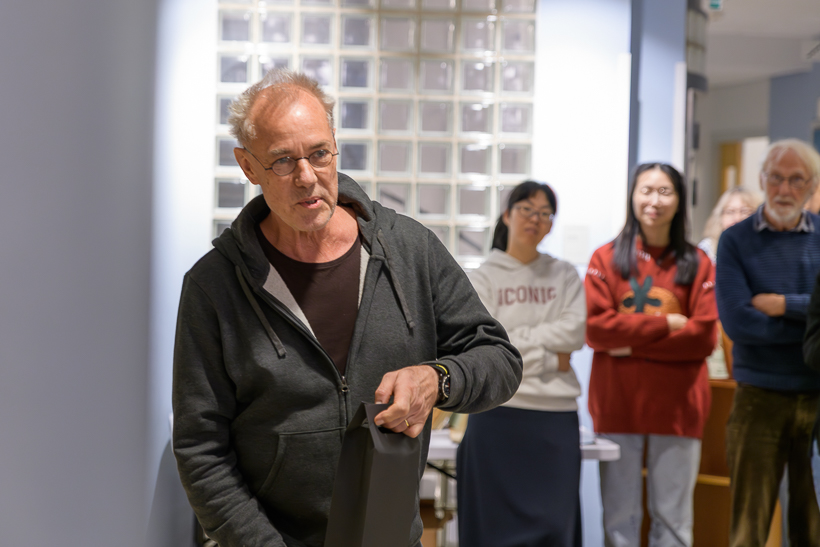
En person framför ett presentbord. Foto.

Det var nästan på dagen femtio år sedan Olle Anderbrant klev in genom dörrarna på Kemicentrum som student. I går klev han ut som pensionär. Olle kommer dock att fortsätta sin forskning som emeritus.

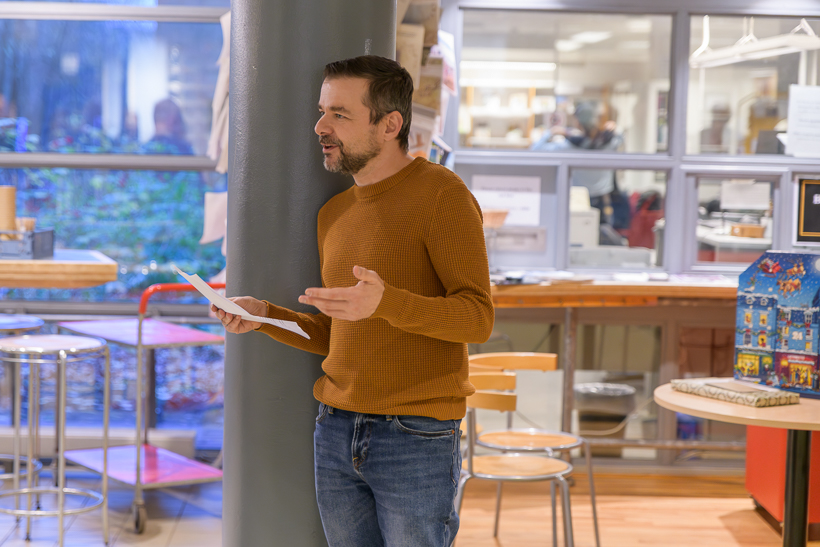
En person står och håller tal. Foto.

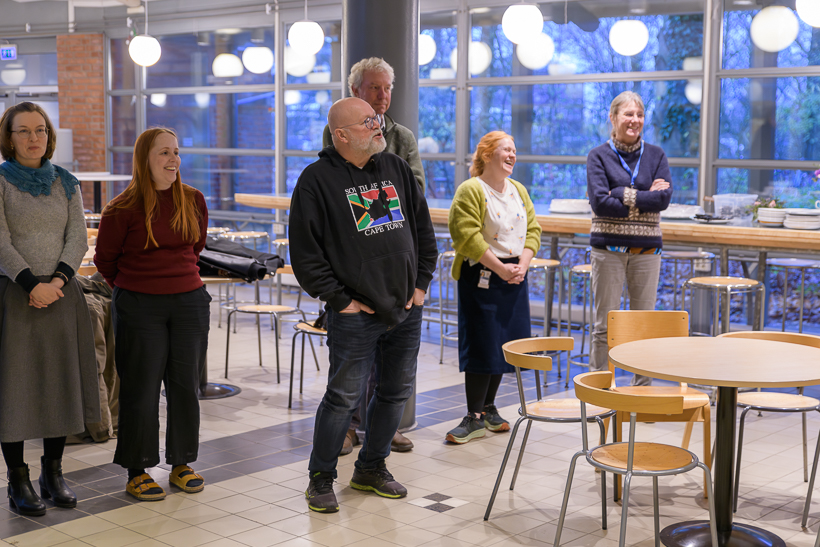
Det var många som kommit till foajén i Ekologihuset för att tacka Olle för hans arbete på institutionen. Först ut bland talarna var Eric Warrant, chef för avdelningen Sinnesbiologi dit Olle hör.

En person står och lyssnar. Foto.

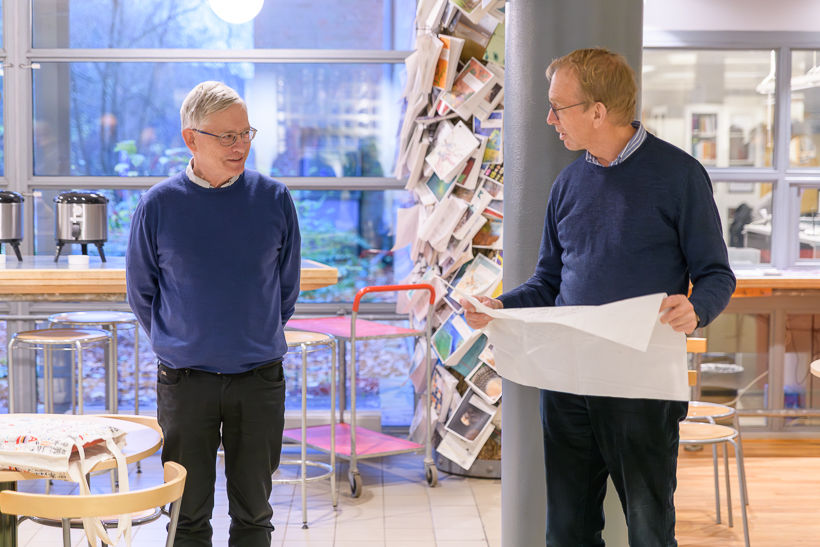
Eric tyckte det kändes lite konstigt att nu vara chef för Olle då Olle tidigare var Erics chef. Det har dock gett Eric full förståelse för hur väl Olle skötte chefssysslorna. Men den största lärdomen Eric fått från Olle är hur en suger ut lukt ur mörka hål. En lätt uppgift för någon som jobbar i Feromongruppen!

En person gestikulerar. Foto.

Näst i tur bland talarna var Fredric Carlsson som å institutionens vägnar tackade Olle för alla hans insatser. Olle har till exempel varit både biträdande prefekt och huvudstudierektor för grundutbildningen i ekologi.

En person står och talar. Foto.

Siste talare var Christer Löfstedt som känt Olle sedan 1971 då de båda var aktiva inom Fältbiologerna och aktivister. De flyttade ner till Lund tillsammans och har delat många saker, inklusive en nedlegad säng.

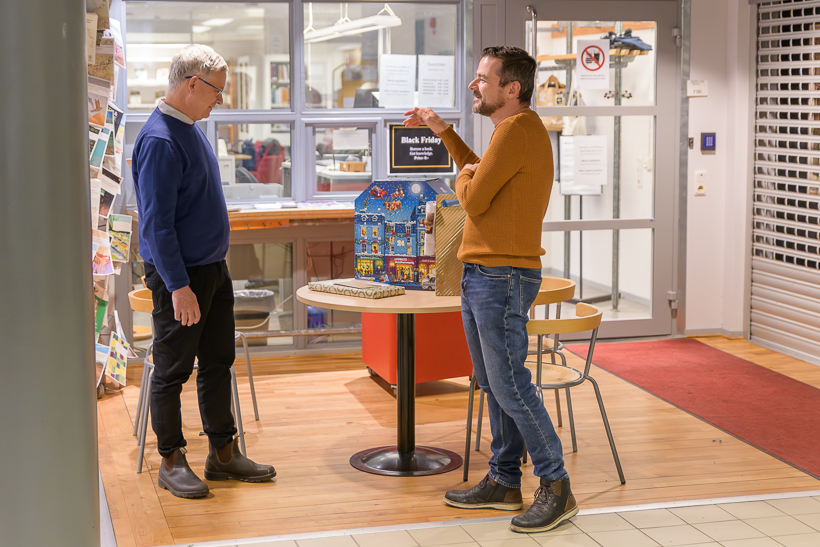
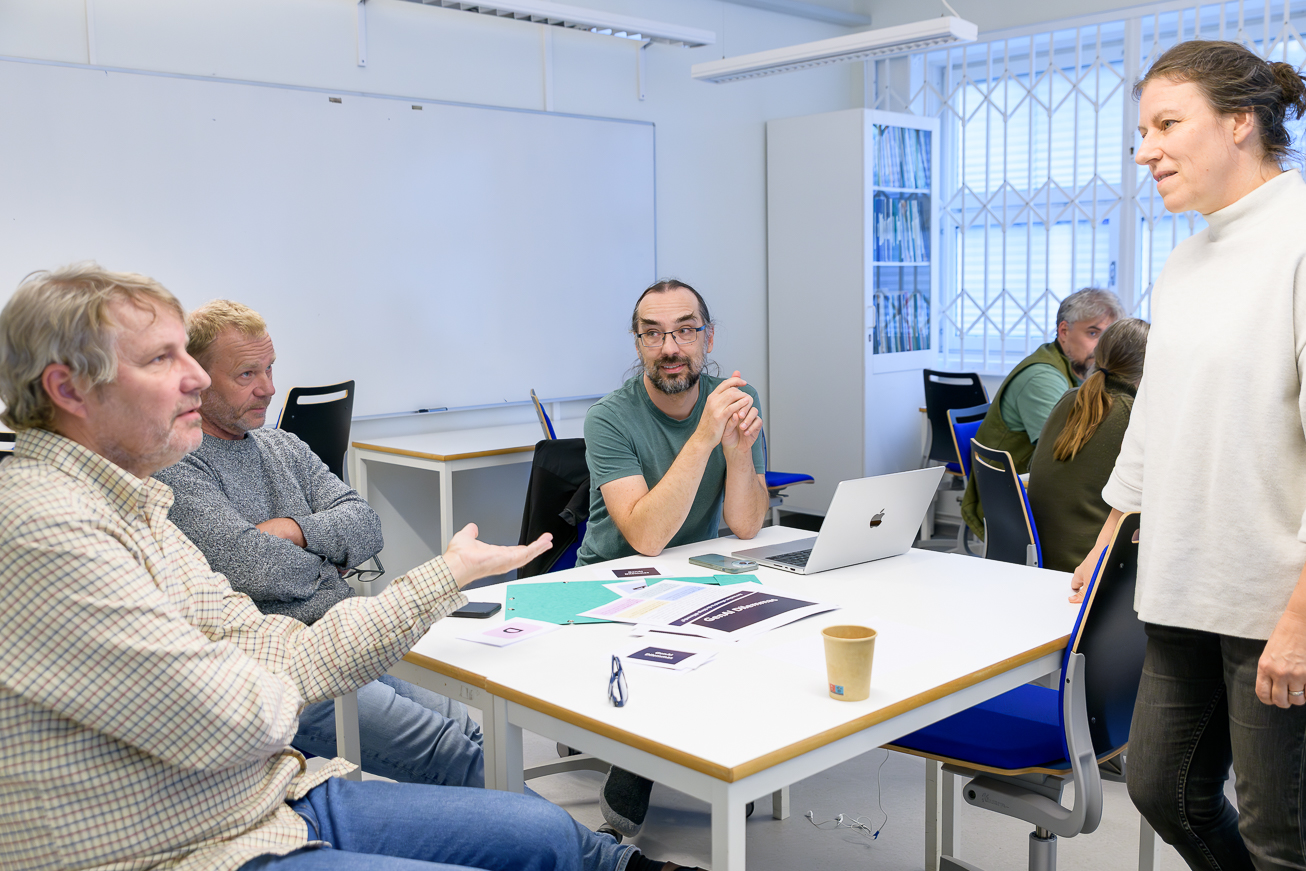
Två leende personer. Foto.

Olle har även varit min högsta chef. Tack för den tiden Olle! Jag hoppas du får en härlig ledighet och en rolig emeritustid.

Text och foto: Inger Ekström

september 19, 2025

Inlägget postades i

Pensioneringar

Kommentarer

0 Kommentarer Lämna en kommentar

Yohan Sassi – new postdoc

A person is lying in the snow. Photo.

Hi there! I’m Yohan, a new postdoc working with Cecilia Nilsson. In my project, I’m exploring the vertical space use of nocturnal migratory birds across Europe, and especially the drivers of low-altitude flight to ultimately predict timing and locations of conflicts between birds and human infrastructure (for example, wind energy facilities and airports). To achieve this, I’ll use information on bird altitude, density, speed, and direction of movement collected every 15 minutes by the European weather radar network. The ultimate aim of this project is to provide a tool that can predict where migration peaks at low altitudes will occur a few days in advance, enabling action to be taken to reduce bird fatalities due to collisions.

I’m originally from Bordeaux, France (famous for its wine), where I did my Bachelor’s in Biology of Organisms and Ecosystems. I then moved to Dijon, France (famous for its mustard), for my Master’s in Behavioural Ecology and Wildlife Management. I ended up in Montpellier, France (famous for its… faculty of medicine – the oldest in the world still in operation) for my PhD and first postdoc, where I mainly investigated how sociality helps griffon vultures to find unpredictable resources (that is, thermal updrafts to move and carcasses to feed). I also worked on questions to reduce conflicts between social raptors space use (griffon vultures and lesser kestrels) and wind energy facilities.

Outside of work, you’ll probably find me outdoors—biking, hiking, discovering new places, or even potentially flying (all while keeping an eye out for birds). I’m looking forward to meeting many of you and hearing your recommendations for places in Sweden that should not be missed!

september 16, 2025

Inlägget postades i

Presentation

Kommentarer

0 Kommentarer Lämna en kommentar

Aarushi Susheel – new PhD student

Portrait of Aarushi Susheel. Photo.

Hello!

I’m Aarushi, a new PhD student co-supervised by Øystein Opedal and Magne Friberg. I’ll be working with Viscaria vulgaris, a type of wildflower that is visited by several species of insect pollinators. Over the next few years, I hope to understand whether there is adaptation between the flowering populations and the local pollinator communities. This will involve comparing floral and insect trait measurements, while also collecting data about how often different pollinators visit, and how efficient they are at depositing pollen. Eventually, we will try to estimate the contribution of each pollinator taxa to the net selection gradient on the plant population, by using different measures of plant fitness.

I also did my Master’s in Lund, and a master’s project with Magne Friberg. I worked with Italian Arabis alpina populations which differed in floral scent. I tried to estimate whether the local pollinators had a preference for the local scent compared to a foreign scent, and also tried to see if they were morphologically adapted to the flowering population. We found some evidence for this, but it was most exciting to conduct unique ‘scape-translocation’ experiments to test these hypotheses. Of course, being in Italy was an added bonus! I enjoyed every part of my project so much that I decided to continue working on similar themes for my PhD. I am especially excited to be back on the third floor, around familiar faces again!

Lately, I’ve been interested in science communication, and using art and storytelling to convey scientific research. I hope to find ways to practice this over the next few years. I also like to do crafts (especially making jewellery), cook and read fiction in my free time. And I’ve been getting into board games over the past year, so if you know any groups who play regularly, please let me know! I hope I’ll get to know more of you over the next few years. I’m almost always happy to chat 🙂

september 16, 2025

Inlägget postades i

Presentation

Kommentarer

0 Kommentarer Lämna en kommentar

Pedro Juarez – new postdoc

Portrait of Pedro Juarez. Photo.

Hej!
I am Pedro Juárez (PJ), a Costa Rican botanist and evolutionary biologist, and currently a postdoctoral researcher in the SpACE research group at Lund University. I work with Dr. Øystein H. Opedal on understanding how variation in pollination ecology mediates population divergence in Neotropical vines, and with Dr. Magne Friberg on the interplay between coevolution and reproductive isolation in polyploid plant speciation.

I received my Ph.D. in Ecology and Evolutionary Biology from the University of California, Santa Cruz, where I investigated the microevolution of pollination shifts from bee to hummingbird pollination in Neotropical spiral gingers (Costus). My dissertation combined large-scale field experiments across elevational gradients, detailed analyses of floral traits, and pollinator behaviour to understand how local adaptation to different pollinators can generate reproductive barriers and promote speciation.

Broadly, my research investigates the processes of plant diversification, with a focus on how the ecology and geography of plant–pollinator interactions drive floral adaptation and reproductive isolation. My work integrates observational, experimental, and modelling approaches. In addition, I am actively engaged in botanical exploration and have described several new endemic plant species from South Central America. I have also collaborated on international projects spanning forest ecology, bird ecology, endophytes, and the behavioural ecology of euglossine bees.

Pura vida,
PJ

september 8, 2025

Inlägget postades i

Presentation

Kommentarer

1 Kommentar Lämna en kommentar

Eviann Cardoza – new postdoc

A person is standing in an old town. Photo.

Hey everyone!

I am Evieann Cardoza, and I am a postdoc at Dr. Claes von Wachenfeldt’s laboratory. My research focuses mostly on understanding the role of a truncated hemoglobin in Bacillus subtilis, as well as investigating other elements of biofilm formation.

I moved to Lund from India, where I received my PhD in Biological Sciences from NMIMS University (Deemed-to-be). During my PhD, I investigated the function of nine cold shock proteins (Csps) in Escherichia coli. During my research, I discovered that Csps are more than just cold adaptation proteins; they are stress proteins that facilitate protection and adaptation to a wide range of stressors. My research resulted in the identification of two previously unknown E. coli Csps and a knowledge of their expression in the bacterium’s stress response.

I’ve only been in Sweden for a little over three months, and I’m still getting used to the quiet and calm life it has to offer. That’s one of the reasons why music is so important in my life. I enjoy listening to Korean, English, Hindi, and Spanish songs all day long! I am fascinated by microorganisms, particularly their stress proteins and how a single protein may perform multiple jobs in the cell. I enjoy working and consider myself a ’workaholic!’. When I’m not working, you may find me meditating, watching romantic comedies, or cooking in the kitchen! I enjoy experimenting with food and trying new recipes.

So, if you want to talk about movies, music or food, feel free to drop by my office (Biology House A, room 232) or email me!

september 4, 2025

Inlägget postades i

Presentation

Kommentarer

0 Kommentarer Lämna en kommentar

Lila Maladesky – new PhD student

A person is standing in front of an old city. Photo.

Hi everyone! My name is Lila Maladesky and I am doing my PhD on sex determination of Wikstroemia sp., a genus of flowering plants from Hawai’i. I work with Colin Olito and Bengt Hansson. In my project, I am investigating the evolution of dioecy (separate sexes) in this genus. In particular, I want to understand the genetic basis of the trait. For this, I’m trying to find the sex chromosomes in several species and compare them.

I grew up in Buenos Aires, Argentina and I did my bachelor’s in Biology at the University of Buenos Aires. There, I worked for some time on cytogenetics of new-world primates. Since then, I have been passionate about chromosomes, and specially, sex chromosomes, because of the crazy systems that these monkeys have. After that, I moved to Europe to do my master’s in the Erasmus Mundus Master Program in Evolutionary Biology (MEME). During this time, I had the chance to live both in Uppsala, Sweden, and in Montpellier, France. During my master’s, I got to work in different projects, but all of them, you guessed it… connected to sex chromosomes. In this case, in arthropods. This is also when I started diving into genomics. Now, I made the brave decision of switching systems to plants, which present an amazing opportunity to keep working on a topic that I love, but from a new and fresh perspective.

Other than biology, I love history, and I am always eager to read books or watch movies about my favorite topics. I also enjoy reading fiction, dancing, hiking and running. But mostly, I would say, I love travelling. I’ve been lucky enough to travel quite a lot already, but I hope to do more of that, and to keep exploring Sweden over the next few years.

september 2, 2025

Inlägget postades i

Presentation

Kommentarer

0 Kommentarer Lämna en kommentar

Xingguo Han – new postdoc

A person is standing outside. Photo.

Hi everyone,

My name is Xingguo Han, and I’m excited to join the Functional Ecology group as a postdoc with Johannes Rousk. My research focuses on microbial ecology — in particular, how microbes respond and adapt to environmental change, and what this means for biogeochemistry and climate feedbacks.

I’m originally from China, where I studied Environmental Engineering for my Bachelor’s and Master’s degrees. I then moved to ETH Zurich for my PhD in Environmental Microbiology, where I investigated how eutrophication affects microbial communities and carbon cycling in lake sediments. After that, I worked as a postdoc at the Swiss Federal Institute for Forest, Snow and Landscape Research (WSL), studying soil microbial communities across climatic gradients in Europe and South Africa within the Biodiversa+ project. That work explored how microbial diversity and metabolism shape soil carbon cycling and greenhouse gas fluxes under warming and drought.

At Lund, I look forward to contributing my expertise in soil biodiversity and microbial processes to projects on ecosystem functioning under global change — such as warming, drought, and extreme events — through both field and lab experiments.

Outside of research, I enjoy cooking (I make pretty good dumplings), as well as hiking, playing tennis, and doing some beginner-level bouldering.

september 2, 2025

Inlägget postades i

Presentation

Kommentarer

0 Kommentarer Lämna en kommentar

Håkan Wallander – kanske världens bästa livsnjutare

En person står och ler. Foto.

I fredags gick Håkan Wallander i pension och blev avtackad av nuvarande och tidigare kollegor vid institutionen.

Ett bord fyllt med presenter. Foto.

Ett flertal tidigare doktorander höll tal till Håkan. I talen framgick det att han är en stor livsnjutare som visat att det är möjligt att ha ett liv även utanför forskningen.

En person står och pekar med hela handen. Foto.

Håkan har varit en inspiration för sina kollegor. Han tycker det är väldigt roligt med forskning, vilket smittar av sig på alla i hans omgivning.

En person håller tal. Foto.

Håkan är även en idéspruta, på gott och ont. Ibland kan det bli lite svårt att realisera de många goda idéerna.

En person talar. Foto. En talhållande person. Foto. En person håller i ett papper och håller tal. Foto. Två personer håller tal. Foto.

Även om Håkan inte alltid varit den mest moderiktigt klädda, så har han alltid varit den mest välklädda för situationen ute i fält.

En person håller ett tacktal. Foto.

Det var mycket minnen i de olika talen, både från utlandsresor till hur ”star struck” vissa blir när en person berättar att de jobbar med DEN Håkan Wallander.

En person håller i en ryggsäck. Foto.

Håkan kommer dock inte att sluta forska, han fortsätter som emeritus. Presenterna, en väderstation och en ryggsäck/cykelväska kommer väl till pass vid resorna till arbetet.

En person håller i ett paket. Foto.Tack för din tid här hos oss på institutionen.

Text och foto: Inger Ekström

september 1, 2025

Inlägget postades i

Händelser Pensioneringar

Kommentarer

0 Kommentarer Lämna en kommentar


Samantha Duhe Jones – new PhD student

A person is standing outside by the sea. Photo.

Hello all!

I’m Samantha, a new PhD student with Andreas Nord. My project will investigate the evolvability of heat tolerance in endotherms, and whether and how phenotypic plasticity may affect that evolvability. To that end, I will be running artificial selection and crossbreeding experiments with Japanese quail.

I earned my Bachelor of Science in Biology at Messiah University in the US, which was also where my longstanding love of birds crystallized into scientific interest. I launched into fieldwork collecting data on avian diversity and abundance across the North American great plains, a habitat where species are in especially steep decline. How will birds in all their magnificent diversity fare in a warming, human-impacted world? What can we do to help them thrive?

To answer my questions, I knew I needed to get into research, and that was why I set my sights on Lund University for a Master’s in Animal Ecology. This degree helped me cultivate skills in statistics and R, experimental design and evolutionary thinking. My thesis involved behavioral assays in Passer sparrows to explore how novel behavioral trait values can arise in a hybrid system. I am thrilled now for the opportunity to continue my education in the fantastic research environment of Lund University. I look forward to learning more about the physiology of birds and contributing to the advancement of our knowledge of the evolutionary constraints which may shape their future success.

While I may have birds on my mind a lot (both for research and recreation), I’m also a classically-trained musician with a couple of degrees in horn performance. My other hobbies include hiking, reading, novel-writing, and board games—especially Wingspan! Maybe you’ll join me for a game sometime?

juni 24, 2025

Inlägget postades i

Presentation

Kommentarer

0 Kommentarer Lämna en kommentar

Katherine Mihalczo – new PhD student

Portrait of Katherine Mihalczo. Photo.

Hi everyone! My name is Katherine Mihalczo. I just started my PhD on insect eco-physiology with Andreas Nord. During my project, I will be investigating the thermal responses and adaptations of bees.

After graduating with my bachelor’s degree in Natural Resource Management from the University of Alaska Fairbanks, I spent a few years trying to find my career niche. Eventually I began working at the Cherokee National Forest in Tennessee, where I was lucky enough to assist with an annual week-long BioBlitz. I spent several of these days searching for the endangered rusty patched bumblebee in Appalachian mountain meadows. I became so captivated by the wild bees we found that I knew instantly that I wanted to pursue a master’s degree to study them.

While studying at Utrecht University in the Environmental Biology program, I designed and completed three research projects related to bees. My master’s thesis investigated phenological advances of wild bees, my internship project found complementary pollinator networks on bean and maize crops, and my elective credits project looked at whether a honeybee’s age is related to her foraging behavior. Through all these projects, my fascination with bees never abated and I am so thrilled to continue researching them here at Lund!

When I’m not thinking about bees, I enjoy hiking, fiber arts, and reading. I also love horror movies, sci-fi novels, and playing Dungeons & Dragons. I am looking forward to exploring Sweden this winter by going snowshoeing and cross-country skiing. I’m excited to meet you all in the coming time, please feel free to stop by my office for a chat if you’d like!

juni 23, 2025

Inlägget postades i

Presentation

Kommentarer

0 Kommentarer Lämna en kommentar

Malin Holmberg – new project assistent

A person and a dog. Photo.

Hi everyone!

My name is Malin Holmberg, and I recently started working as a project assistant for Andreas Nord and the thermal biology group. The project that I will be a part of is an ERC project called HotLife, were we the coming years aim to further our knowledge of how heat tolerance is inherited in birds and whether plasticity influences the evolvability of this. The project will also investigate if there is already a selection on increased heat tolerance happening in the wild using Great tits as a study species.

Having had the fortune of spending my formative years surrounded by first the beautiful arctic nature of Lapland, and then the unique island environment on Gotland my fascination for animals and the natural world started early on. Academically this has resulted in a multidisciplinary background spanning both veterinary medicine as well as zooecology and conservation biology. In 2020 I finished my DVM at the university of Copenhagen with a retrospective study of the reproductive efficiency of Icelandic horses. The programme covered a wide range of subjects, and my interest in animal physiology and immunology were firmly lit. After graduation I spent some time gaining clinical experience before delving back into the academic world. This time I wanted to broaden my understanding of the subject of biology to include wild fauna and the dynamics of natural ecosystems, as well as work related to the conservation of these.

I therefore pursued another master’s degree, this time in conservation biology at Lund university. The two years at the department flew by in a blink of an eye, and I had a great time furthering my theoretical knowledge as well as adding on to my practical skillset toolbox with field/labwork and more data management and statistical analysis experience. My thesis this time was also related to reproductive efficiency, but the study species was somewhat smaller in stature as the focus was urban dwelling Great tits. The project included more of my favourite subjects: animal physiology and immunology, with the goal to determine whether food limitation specifically in terms of omega 3 fatty acids could be one contributing factor to the lowered reproductive output seen in urban birds.

Following my biology master’s I spent 2 years doing internships both at Lund university as well as in zoomedicine at Nordens Ark Zoo, and working as a lab- and project assistant on both bird and invertebrate projects. I also worked as an official veterinarian at Livsmedelsverket, gaining experience from governmental work before landing my current position with the thermal biology group.

In my free time I can usually be found in one of the forests close to Malmö or Lund, hiking or trailrunning. Alternatively, me and my adorable but utterly spoilt Staffordshire bullterrier Minta will wreak some havoc on the agility field at the local dog club! A true millennial, I do of course also enjoy sourdough bread baking and doting on all the potted plants that I have crammed onto the windowsill in my apartment. Greatly looking forward to getting to know you all, I am always up for a chat and a cup of coffee if you want to swing by my office!

juni 19, 2025

Inlägget postades i

Presentation

Kommentarer

0 Kommentarer Lämna en kommentar

Nyare inlägg Äldre inlägg