The Biology doctoral student council (BDR) had meetings on 9 March. Among other things, they discussed BDRs guest lecture, meeting with the head and deputy head of the department, new members and elections to student councils. You find the minutes from the meeting on our Swedish internal website.
Den 8 februari hade institutionsstyrelsen möte. Då diskuterades bland annat bokslutet 2022 och den strategiska planen. Hela protokollet finns på vår internwebb.
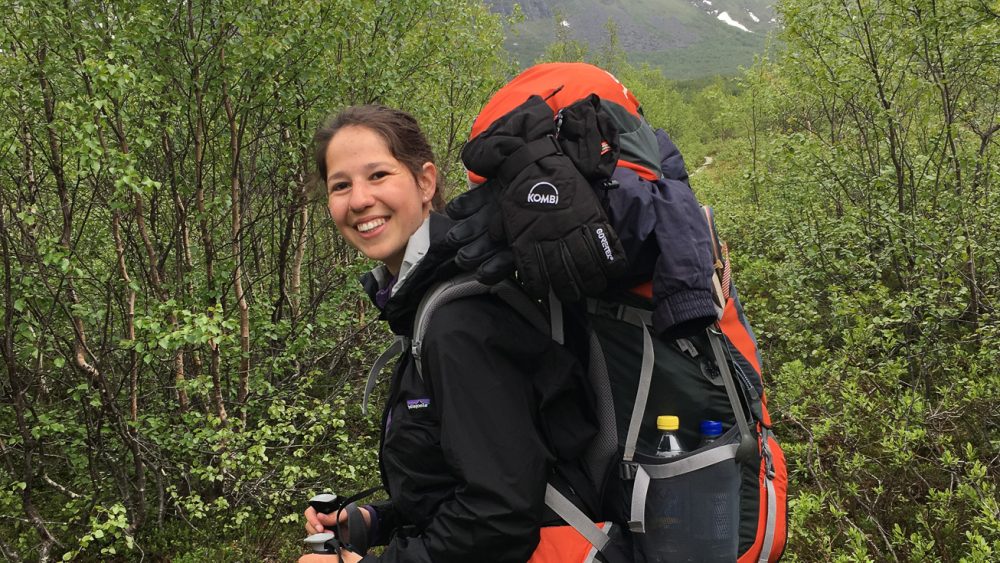
My name is Erica Winslott and I started my PhD in April last year (2022) in the new lab of Maja Tarka. In my PhD, I will investigate how selection and genetic variation co-varies in wild populations of the green tortoise beetle Cassida viridis.
Since growing up next to my grandparents that have a farm, and close to the forest, nature has always been a big part of my life. To get the opportunity to work this close to nature, and a bit in the lab, is amazing.
I am originally an ornithologist that investigated physical challenges of migration in my MSc project, and further worked as a research assistant mainly in projects with research that had something to do with birds. During this time, I accidently stumbled over the project of the C. viridis beetles and fell in love with the system and the questions. To investigate the evolutionary potential of wild populations is something that feels really exciting and important for the future of many animal species.
In my spare time I often lay puzzles, do embroidery stitching, spend time out in the environment taking long walks in the forest or I go fishing.
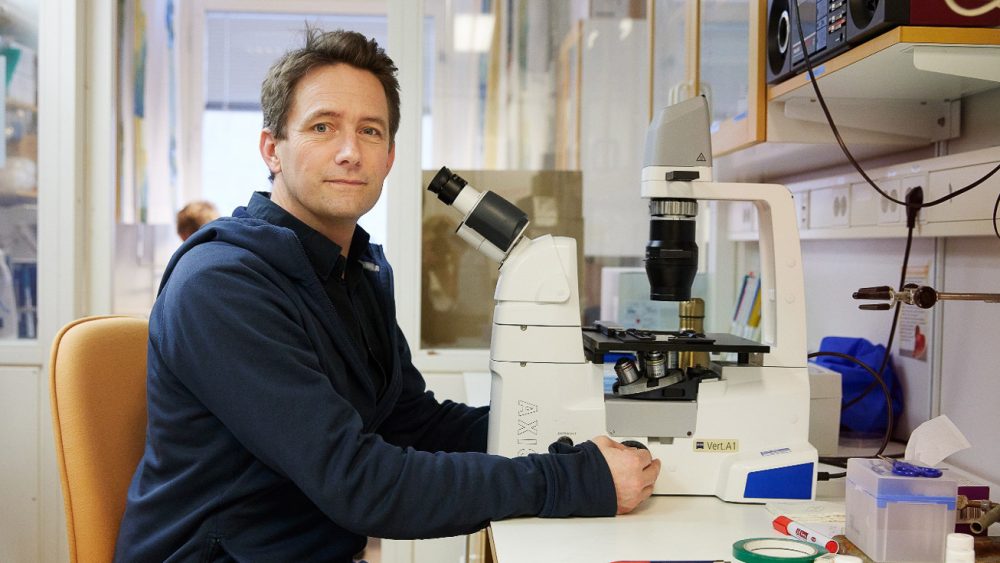
Idag tackade vi av Lennart Okla på hans nästa sista dag vid institutionen. Lennart ville inte ha något storslaget avfirande, men den något utökade centrala administrationen var på plats.
1980 började Lennart jobba på den dåvarande limnologiska institutionen. Sedan dess har mycket hänt, inte minst på IT-fronten även om de flesta fortfarande vill att ”allt bara ska funka”.
Vid frågan på vad han ska hitta på som nybliven pensionär svarade Lennart: – Jag och min fru går i pension samtidigt så på måndag kommer vi att sitta mittemot varandra vid frukostbordet, titta ut genom köksfönstret och fundera på vad vi ska hitta på idag.
Lennart som jobbat med IT sedan lång tid tillbaka, valde att jobba kvar under den mörka årstiden. Nu ser han fram emot att ljuset återkommer och att börja pyssla med alla projekt som finns hemma och i sommarhuset.
Istället för tacktal för presenter och blommar hade Lennart skrivit verser om personer han jobbar med. Dessa framförde han med rörd stämma med många igenkännande skratt från publiken.
Nu går ännu en av institutionens gamla rävar i pension och lämnar ett tomrum efter sig.
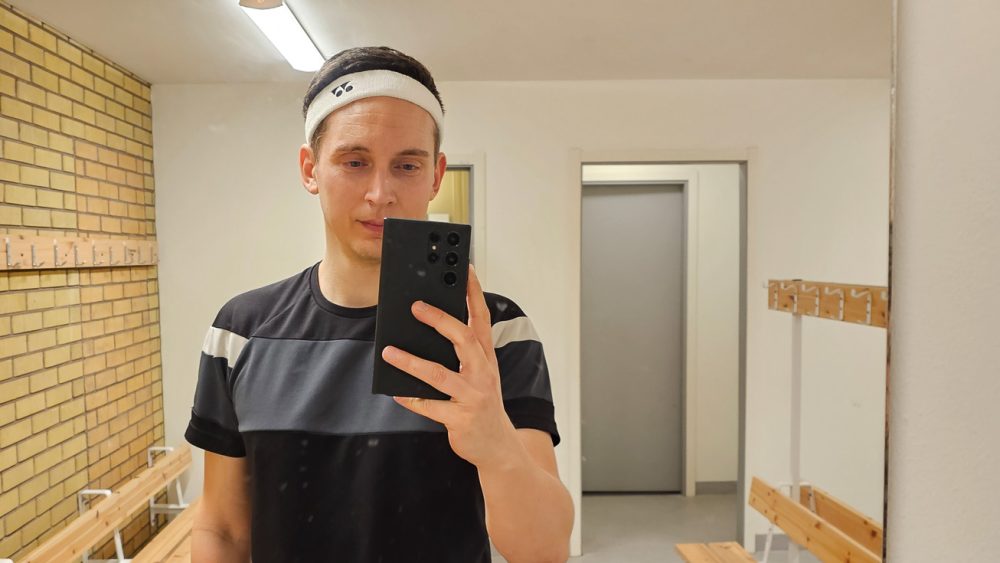
Howdy! My name is Natalia and I have joined both the neurobiology group and vision group as a doctoral student under the supervision of Lina Herbertsson. I’m interested in studying how pesticide exposure impacts the foraging decisions of insect pollinators and the implications this may have for plant-pollinator interactions.
I received my bachelor’s degree in psychology from the University of Texas in San Antonio. Wanting to learn more about the mechanisms that underly sensory and cognitive behaviour in animals, I moved to England and earned a master’s degree in animal behaviour from the University of Exeter. During my masters I started working with honeybees, investigating whether honeybees could detect the presence of polyethylene microplastics (PE-MPs) in floral nectar solutions and if imbibing PE-MPs decreased survival over time. My curiosity to examine if pesticides alter the honeybee’s ability to degrade microplastics has eventually led me to my current position.
My PhD, which will be co-supervised by David O’Carroll and Maj Rundlöf, focuses on the sublethal effects of commonly used pesticides in insects and involves experts in analytical chemistry, genetics, metabolomics, physiology, as well as landscape and behavioral ecotoxicology. I want to find out how neonicotinoids and other insecticides interfere with interactions between non-honeybee pollinators and plants, with a particular interest in floral preference.
During my spare time I like to do outdoor activities such as hiking, kayaking, and camping. I also enjoy making digital art and storyboard animations.
Den 27 januari hade grundutbildningsnämnden möte. Då diskuterades bland annat doktorandernas Open R! sessioner, elproblem in Bkiologihus B, ventilationsbytet, självvärderingar till kvalitetsutvärderingen 2023, ansökningsstatistik för masterprogrammen, infomöte om exjobb och kursanalyser. Du hittar hela protokollet på vår svenska internwebb.
GENECO has held their annual winter meeting at Kulturen, the indoor and open-air museum of historic buildings and exhibitions here in Lund.
GENECO is the graduate research school in genomic ecology, open to all PhD students in the Nordic countries. The students come together to understand genomic techniques and applications – and communicate their research ideas.
The meeting with the theme ”Application of new cool methods”, was opened by Geneco:s director Bengt Hansson who also presented the speakers through the day together with Postdoctoral fellow Emily O’Connor.
Arild Husby was invited from Uppsala University to talk about the role of epigenetics in the seasonal timing of reproduction.
Arild Husby from Uppsala University.
Robin Pranter held the first PhD presentation – Neural crest cell migration and differentiation in wall lizards. Victor Kalbskopf followed with a presentation titled ”Haplotype dynamics within avian malaria infections”.
The meeting was set in a room full of beautiful wall art.
After a nice lunch, where there was time to browse around the museum or just chat with colleagues, Damandeep Kaur held her PhD presentation titled ”Experimental evolution to study the evolution of dosage compensation”.
Fabien Burki, of Uppsala University, talked about he origin of plastids, with insights from the uncultured microbial diversity.
Fabien Burki from Uppsala University with a makeshift pointer.
After a coffee break the Ph D presentations continued with Mingyue Yuan and Vittoria Todisco.
Wall painting meets modern technology at Kulturen.
Finally Emília Santos talked about how she uses CRISPR-CAS to study morphological evolution in cichlid fishes.
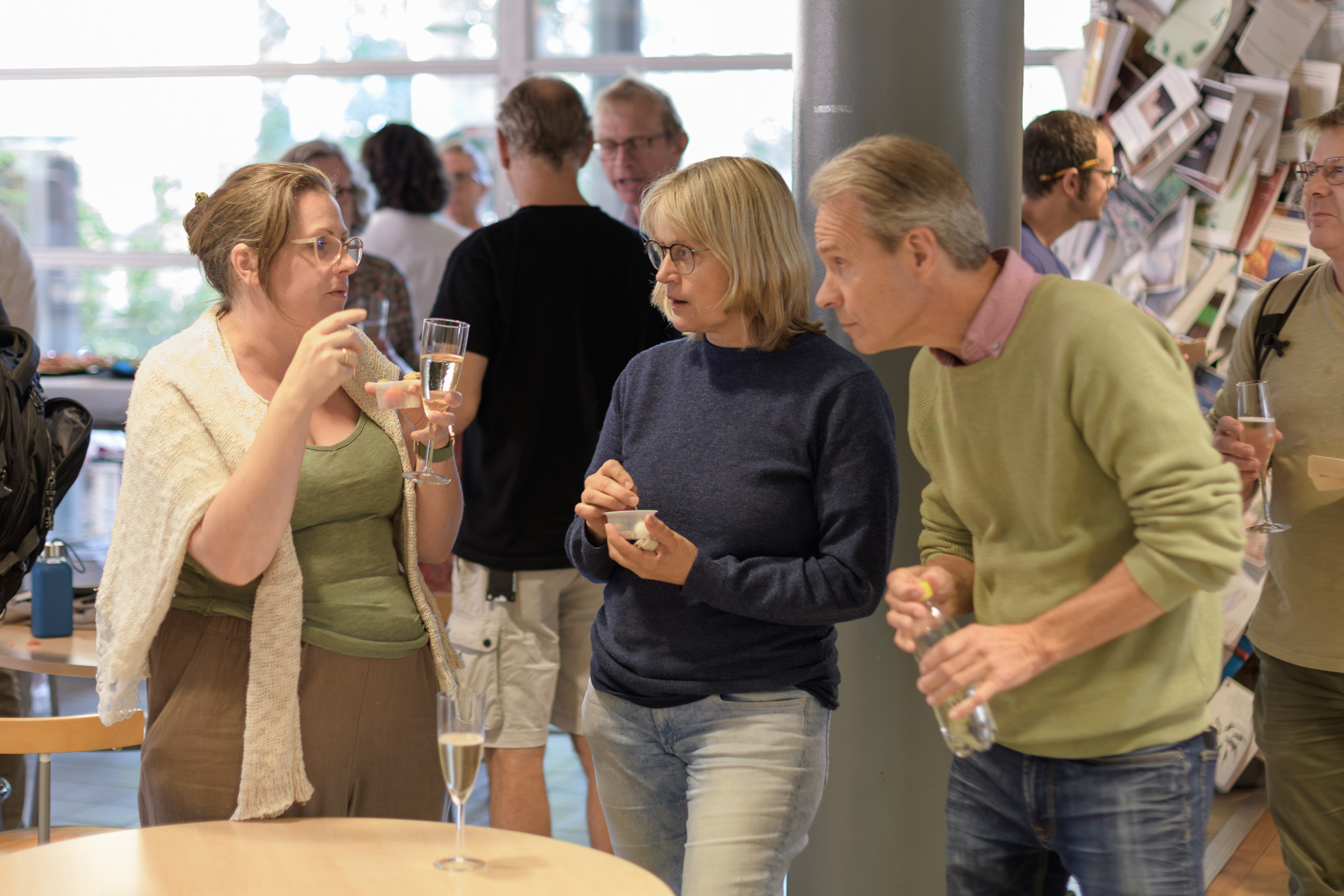
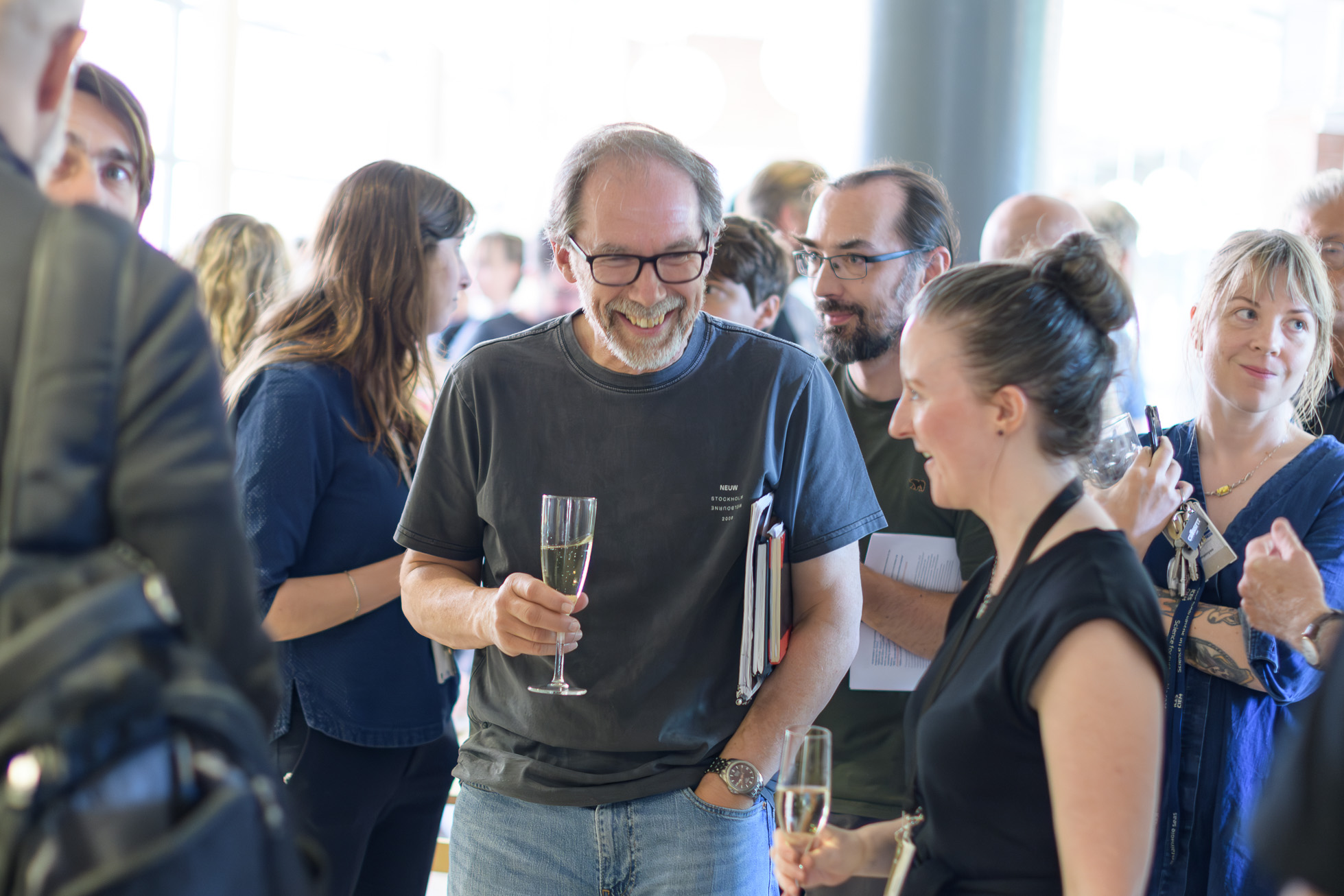
The day at Kulturen was summed up with a mingle and drinks, before dinner was served.
The Biology doctoral student council (BDR) had meetings on 5 December. Among other things, they discussed the department budget, the BDR guest talk and the PhD intro event. You find the minutes on our Swedish internal website.
Vad har grönalger, strutsar och bin gemensamt? Forskarna Charlie Cornwallis och Maj Rundlöf presenterade deras forskning på ett välbesökt Tandem talk den 2 februari.
Djurs och organismers sociala förmåga – samarbete i alla nivåer av liv är alltså något som intresserar båda forskarna.
Charlie Cornwallis pratade under rubriken ”Evolutionen av ett socialt liv”.
Varför skapas samarbetande grupper och hur skiljer de sig åt? På senare tid har Charlie uppmärksammats för forskningen på strutsar och deras förmåga att samarbeta kring parning och ruvning. Charlie är även intresserad av grupper av flercelliga organismer formas – och då särskilt grönalger. Till sin hjälp har Charlie det han kallar A-laget – eller alg-laget – och de behövs! I synnerhet när det finns långt över 4000 arter att studera: tillsammans har de utvecklat system för att studera flercellighet.
Maj Rundlöf höll ett föredrag med titeln ”Bin, socialitet och landskapets ekotoxikologi”.
Maj Rundlöf har studerat bin och hur de exponeras för bekämpningsmedel och hur de påverkas av det. När bin är ute och samlar pollen och nektar plockar de även upp bekämpningsmedel. Detta leder till att bin skapar unika blandningar genom att ta med sig pollen, nektar och gifter hem. Vi kan fråga oss om bin gör någon form av riskbedömning överhuvudtaget? Hur stora områden rör sig i beror på hur sociala de är. Ju mer sociala bin är desto mer utsatta, men också bättre på att hantera utsattheten blir de.
Kommentarer